If you want to refresh your skin using your own biology instead of synthetic products, regenerative treatments like PRP and PRF may be exactly what you are looking for. Both use the healing power of your own blood to stimulate collagen, improve texture, and brighten tired skin. At The Injector Collective in Lehi and Draper, our independent injectors offer these natural rejuvenation options for people who want to age gracefully on their own terms. Here is a plain-English look at how they work, how they differ, and what results to expect.
What Are PRP and PRF?
PRP stands for Platelet-Rich Plasma and PRF stands for Platelet-Rich Fibrin. Both are regenerative treatments that harness the growth factors already living in your blood. The process starts with a small blood draw, similar to a routine lab test. That sample is placed in a centrifuge, which spins it to separate and concentrate the platelets and growth factors. Those concentrated healing components are then injected into targeted areas of the skin or applied topically during a microneedling session. Because the material comes entirely from your own body, the risk of an allergic reaction is very low. You can learn more on our PRP and PRF service page.
PRP vs PRF: What Is the Difference
The core difference comes down to how the blood is spun. PRP uses a high-speed spin that isolates platelets in the plasma, giving you a concentrated dose of growth factors ready to inject. PRF uses a slower spin that preserves even more of the good stuff: additional growth factors, white blood cells, and stem cells held together in a natural fibrin matrix.
- PRP: A concentrated plasma layer is extracted and injected. It delivers a strong initial burst of growth factors.
- PRF: The gentler spin builds a fibrin scaffold that releases healing factors slowly over time, extending the regenerative effect.
Think of PRF as the next-generation evolution of PRP. Because it holds onto more healing components and releases them gradually, PRF generally produces better, longer-lasting results. Your injector can help you decide which option fits your goals during your consultation.
What Is a Vampire Facial?
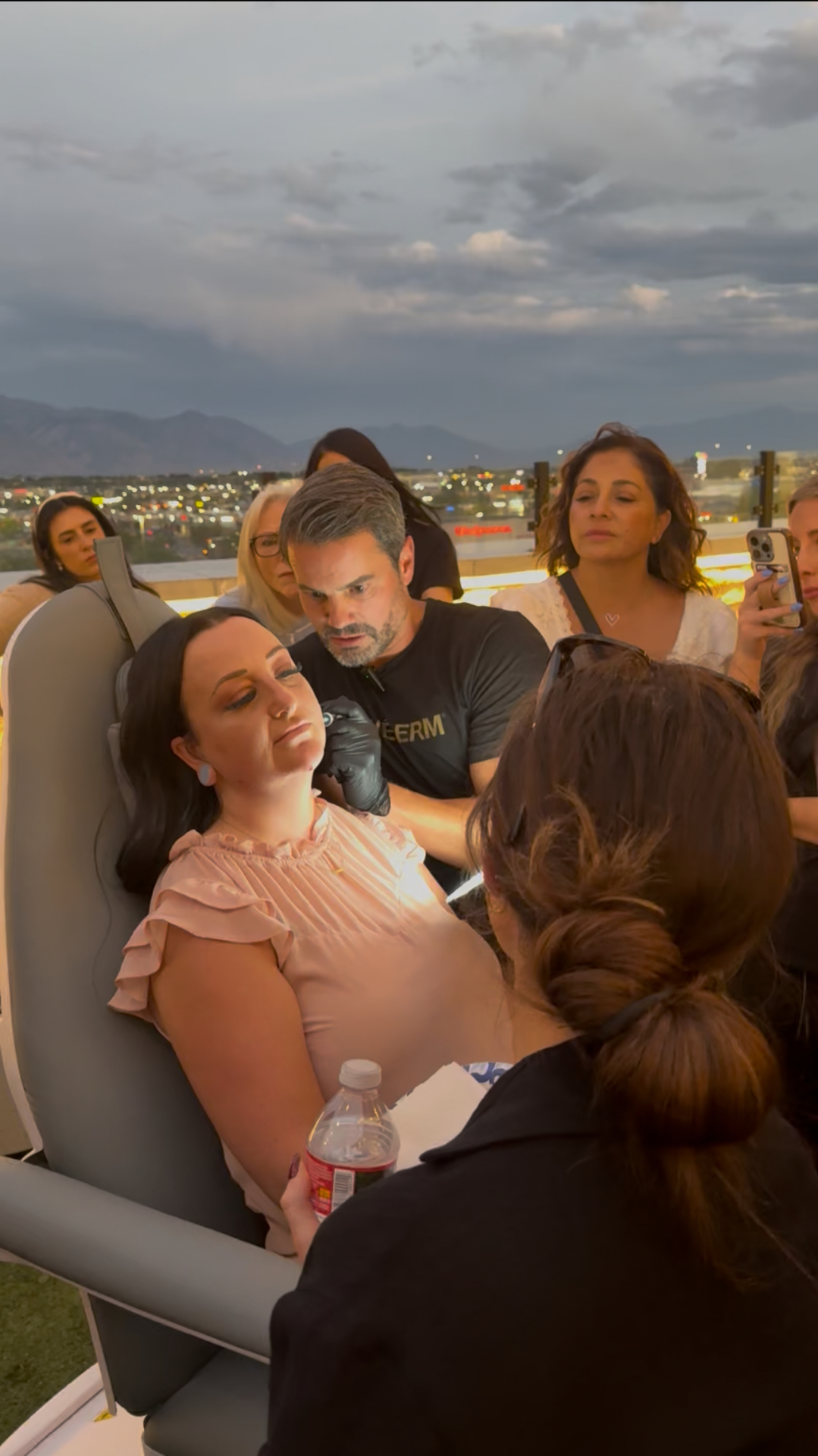
The vampire facial is one of the most popular ways to use this technology. It combines microneedling with PRP or PRF applied topically to the skin. The microneedling device creates tiny micro-channels in the surface, and those channels let the growth factors penetrate deeper than they could on their own. The result is amplified collagen stimulation and a smoother, more refreshed complexion. If you are curious about the microneedling side of the treatment, our microneedling guide walks through the basics.
Benefits and Ideal Candidates
These treatments appeal to people who want visible improvement without introducing anything synthetic. Because the growth factors come from your own blood, the whole approach is about 100 percent natural.
- Stimulates collagen and elastin production
- Improves skin texture, tone, and tightness
- Softens fine lines and helps with under-eye hollowing
- Pairs beautifully with microneedling for deeper results
- Can support early-stage hair restoration
- Carries minimal allergic-reaction risk since it is your own biology
You may be a great candidate if you want holistic anti-aging, better texture, or help with fine lines and under-eye concerns. It is also worth exploring for early-stage hair loss. PRP and PRF are not recommended for people with blood disorders or those taking blood thinners, so an honest conversation with your injector is an important first step. Common treatment areas include the full face, under-eyes, neck and decolletage, scalp for hair, and the hands.
Results, Sessions, and Pricing
Regenerative results build gradually. Most people begin noticing changes over 4 to 6 weeks, see optimal results around 3 months, and enjoy improvements that last 6 to 12 months. For that reason, a series of 3 treatments spaced 4 to 6 weeks apart usually delivers the best outcome. The treatments are very safe. The most common side effects are mild redness, swelling, or bruising that typically resolves in 1 to 3 days. Following simple recovery steps helps, and our injectable aftercare guide covers what to expect afterward.
Pricing typically runs about $500 to $800 per session, with PRF usually a little higher than PRP because of its enhanced growth-factor concentration. Keep in mind that each independent injector at The Injector Collective sets their own pricing and may run their own specials, so the best way to get an accurate quote is to connect directly with a provider. Ready to get started? Find your injector at our Lehi or Draper location and book a consultation to see whether PRP or PRF is right for your skin.